 |
Architectural Styles |
| Map Requires the Flash Player Plug-in |
| Historic Sites and Districts List from A to Z |
| Archeological Zones |
| Architectural Styles |
 |
|
|
|
|
|
 |
|
||||
 |
Mediterranean Revival (1917-1930s) |
 |
|
||
 |
 |
 |
|
||
|
b |
|
|||
|
© Janus Research |
|
|||
 |
|
||||


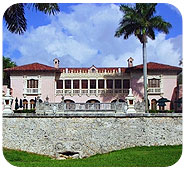
:: Mediterranean Revival (1917-1930s)
b. The Mediterranean Revival style defined Miami during the Boom of the 1920s. The style reflects the architectural influences of the Mediterranean coast: Italian, Byzantine, Moorish themes from southern Spain, and French. Applied Spanish baroque decoration is generously used around openings, balconies, and cornices. Parapets, twisted columns, pediments, and other classical details also are frequently used. Arches are often featured. The most common materials are stucco walls, red tile roofs, wrought iron grilles and railings, wood brackets and balconies, and oolitic limestone, ceramic tile and terra cotta for ornament. Patios, courtyards, balconies, and loggias replace the front porch. Fenestration is usually the casement type. With its elaborate detailing, Mediterranean Revival architecture works best in large buildings.
Examples:
The Alamo
Beverly Terrace Historic District
Bryan Memorial Methodist Church
Coconut Grove Playhouse
Cushman School
Philip Dusenbury House
East Coast Fisheries
El Jardin
Fire Station No. 2
Fire Station No. 4
First Presbyterian Church
Freedom Tower
Gesu Church and Rectory
Greater Bethel A.M.E. Church
Gold Coast Pharmacy
Miami Woman's Club
Mount Zion Baptist Church
Olympia Theater and Office Building
Villa Woodbine
Wolpert Apartments